
Checking Criminal History in Wharton County
Begin a Wharton County criminal record check with the source that answers the question at hand. The County Clerk holds filed Class A and B misdemeanor cases. The District Clerk keeps felony cases in the 23rd and 329th District Courts. The sheriff's detention network is the right first stop for current county custody. The Texas Department of Public Safety, or TxDPS, provides a statewide public slice of convictions and deferred adjudications. None of these sources replaces the others.
Collect the full legal name, likely spelling variants, date of birth when lawfully known, arrest date, and possible court level before searching. Compare the court, charge, filing date, and identifiers instead of relying on a name alone. The official Wharton County directory shows how the offices are divided.
The county gateway pictured below is the safest route into local office pages and their current links.

Using the county entry point helps avoid vendor lookalikes and stale clerk addresses.
- Choose the custodian by record type: arresting agency, jail, county clerk, district clerk, or TxDPS.
- Search with a name or cause number and add date details to narrow common names.
- Compare the agency, court, charge, and dates before treating a hit as a match.
- Open the docket or custody detail, then identify the document that proves the point you need.
- Ask the originating clerk or agency for a copy or certified record when the online view is not enough.
Four Wharton County Record Trails
An arrest can create four distinct Wharton County records. The arresting sheriff, police department, constable, or state officer writes the incident or arrest report. Wharton County detention staff create booking and custody entries. A magistrate and later a clerk create court records only when the legal process reaches those points. Fingerprints and reportable arrest data also begin a TxDPS Computerized Criminal History event cycle.
Record flow: Agency report › county booking › court filing and disposition › TxDPS history update.
The sequence explains many apparent conflicts. A jail entry may post before a prosecutor files a case. A court may show a dismissal before that outcome reaches the state file. A public name result may also point to the wrong person. Confirm the final outcome in the signed judgment or dismissal held by the clerk.
| Source | Best answer | Key limit |
|---|---|---|
| Arresting agency | Incident facts and arrest narrative | Does not prove the final charge |
| WCSO detention | Current or recent booking and custody | Booking is not a conviction |
| County or District Clerk | Filed charge, docket, order, and outcome | Split by offense level |
| TxDPS | Public statewide conviction and deferred data | Name search is not fingerprint proof |
Texas Official Background Checks
TxDPS offers two different official routes. The Criminal History Name Search lets a member of the public create an account and search public conviction and deferred-adjudication information authorized by Government Code section 411.135. Each submitted name search uses one $1 credit, even when no match is returned. Card purchases add 2.25 percent per credit and a $0.25 transaction fee.
The official Wharton County criminal history search screen is shown below.
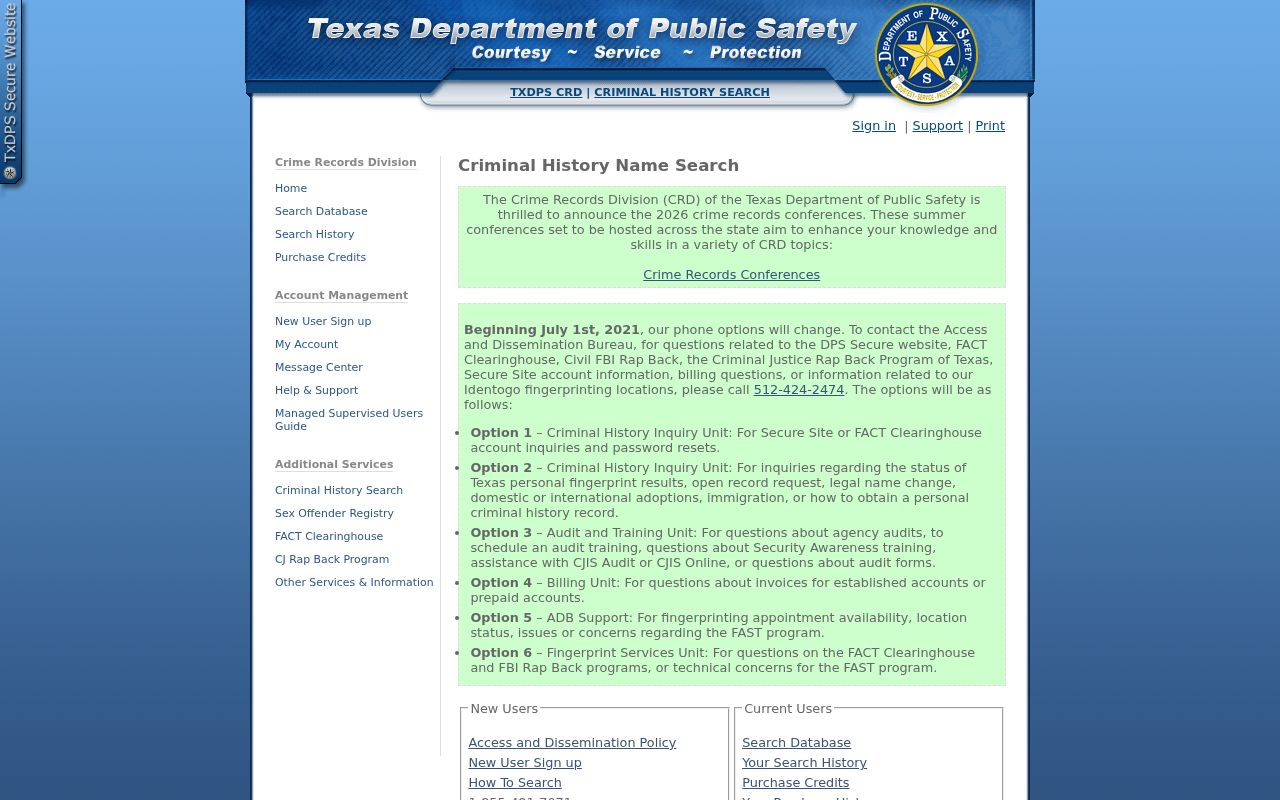
The state portal is broad, but its public output is not a full fingerprint-confirmed history.
TxDPS publishes separate search instructions for credits, match review, offline results, and saved-search windows.

Previewing identifiers before opening records reduces the chance of confusing people with similar names.
For your own identity-confirmed Texas record, follow TxDPS Personal Review and FAST fingerprint services, operated by IDEMIA through IdentoGO.
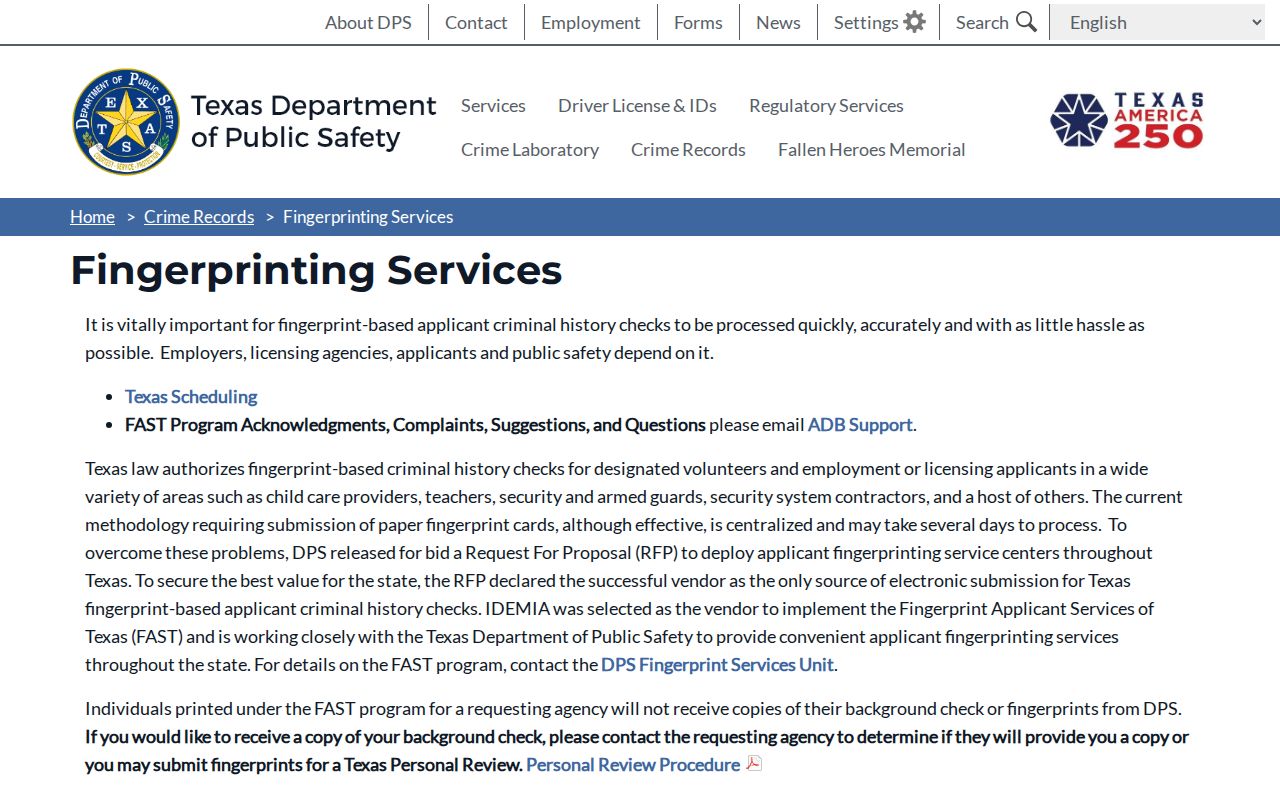
FAST results for an authorized agency request go to that agency, while personal review follows its own TxDPS instructions.
Wharton County Criminal Clerk Split
The charge level determines which Wharton County clerk can supply a case file. Felony indictments, docket events, judgments, and expunction filings are kept by District Clerk Kendra Charbula at 103 S. Fulton Street. The number is 979-532-5542, and the public counter is open weekdays from 8:00 a.m. to 4:30 p.m. The constitutional County Court handles Class A and B misdemeanors, with County Clerk Barbara Svatek as custodian at 309 E. Milam Street, Suite 700. That office uses 979-532-2381, keeps the same counter hours, and accepts phone calls until 5:00 p.m.
The District Clerk's posted 2022 schedule lists a $5 manual civil or criminal record search, $1 per paper page, and $5 for certification. Confirm current charges before ordering. Do not apply that schedule to the County Clerk. Municipal and justice courts hold fine-only Class C and local ordinance files, so those cases may never appear through the felony link.
District Clerk
103 S. Fulton St.
Wharton, TX 77488
979-532-5542
Weekdays, 8:00 a.m. to 4:30 p.m.
County Clerk
309 E. Milam St., Suite 700
Wharton, TX 77488
979-532-2381
Weekdays, 8:00 a.m. to 4:30 p.m.
Criminal Record Types
Wharton County criminal records differ by creator, purpose, and time. An incident report describes an allegation and an officer's work. An arrest report states the asserted grounds for taking a person into custody. The jail's booking record concerns intake, charges delivered to detention staff, bonds, and release. A court file tracks prosecution under one cause number. TxDPS groups reportable fingerprint events with later prosecutor and clerk reports.
Other records have narrower homes. The issuing court and law enforcement maintain warrant data. Wharton County CSCD supervises court-ordered community supervision, but it does not publish an online roster of working case files. TDCJ keeps prison and parole information. TxDPS maintains the Texas Public Sex Offender Registry from local registration data.
- Agency reports: narratives, observations, evidence references, and supplements held by the investigating office.
- Booking records: intake, custody, charge, bond, and release data held by WCSO.
- Court files: complaints, indictments, motions, pleas, orders, judgments, and sentences held by the proper clerk.
- State history: the public TxDPS conviction and deferred-adjudication slice or a fingerprint personal review.
- Restricted records: juvenile, expunged, nondisclosed, victim, and other protected information governed by specific law.
Wharton County Custody Records
The Sheriff's official page links the WCSO Detention Center Network and VINELink. Enter the jail system through that county page because the detention address is an unbranded numerical HTTP link. Its Inmates, Charges, and Days tabs cover current and released lists. The visible roster can show full name, age, race, sex, admit date, arresting agency, and primary charge details. It does not publicly display every booking field.
Call 979-532-1550 when intake is too new to appear, spelling is uncertain, or a person may have bonded or transferred. Ask WCSO for a historical booking sheet when the public list is not enough. VINELink is useful for custody alerts, not as proof of a case outcome. The TDCJ Online Inmate Search applies after a sentenced person moves into state custody. Federal prison custody belongs in the BOP locator.
Note: A jail charge reflects intake information and can change after prosecutor review, filing, dismissal, or judgment.
Inside a Wharton County Criminal Record
A Wharton County criminal record must be read in context. A TxDPS history is built around identity and event cycles, while a court file centers on one cause number and a booking entry centers on custody. Names and aliases help locate a record, but State Identification, FBI, transaction, booking, and cause numbers are stronger separators. Missing state disposition data can be a reporting gap, not proof that a case remains open.
| Name & Identifiers | Legal name, aliases, birth data, SID, FBI number, and transaction identifiers where law permits. |
|---|---|
| Arrest / Booking Data | Arrest date, reporting agency, intake charge, booking time, bond, custody, and release events. |
| Charges & Statutes | Officer allegations, prosecutor-filed counts, statutory citations, and offense level. |
| Disposition | Dismissal, no-bill, acquittal, deferred adjudication, or conviction, with date and court. |
| Sentence | Fine, confinement, restitution, or community supervision stated in the judgment. |
| Custody / Supervision | County jail, TDCJ unit, release, parole, or a public court order for supervision. |
Note: Match the record's identifiers and read the final court disposition before drawing a conclusion from an arrest or charge entry.
Wharton County Disposition Records
The Wharton County District Attorney screens charges and may decline, amend, or replace the intake allegation. A grand jury may return an indictment or a no-bill in a felony matter. Clerks then report filed charges and outcomes to TxDPS. That chain is why the court judgment should control when a booking label and the later case differ.
The District Attorney's official page identifies the local prosecution office and its victim-services work.

The prosecution office is part of the records flow, but certified filed documents still come from the County or District Clerk.
- No-bill
- The grand jury did not return the presented felony indictment.
- Dismissal
- A filed charge ended without a conviction, though separate agency records may remain.
- Deferred adjudication
- Court supervision without an immediate finding of guilt, subject to later court action.
- Conviction
- A judgment of guilt that should be confirmed in the signed court record.
Public Access Laws in Texas
The Texas Public Information Act starts from access to governmental information unless another law creates an exception. The practical Wharton County rule is to ask the custodian that created or keeps the record. A written request should identify existing files rather than ask an office to conduct research. Active investigations, juvenile material, protected victim information, driver-license data, medical information, and confidential criminal-history information can be withheld or redacted.
Key Texas laws:
Government Code § 411.083 makes criminal-history information confidential except as Chapter 411 allows.
Government Code § 411.135 authorizes the TxDPS public conviction and deferred-adjudication search.
Code of Criminal Procedure Chapter 55A governs qualifying expunction cases.
Government Code § 552.021 grants access unless an exception applies.
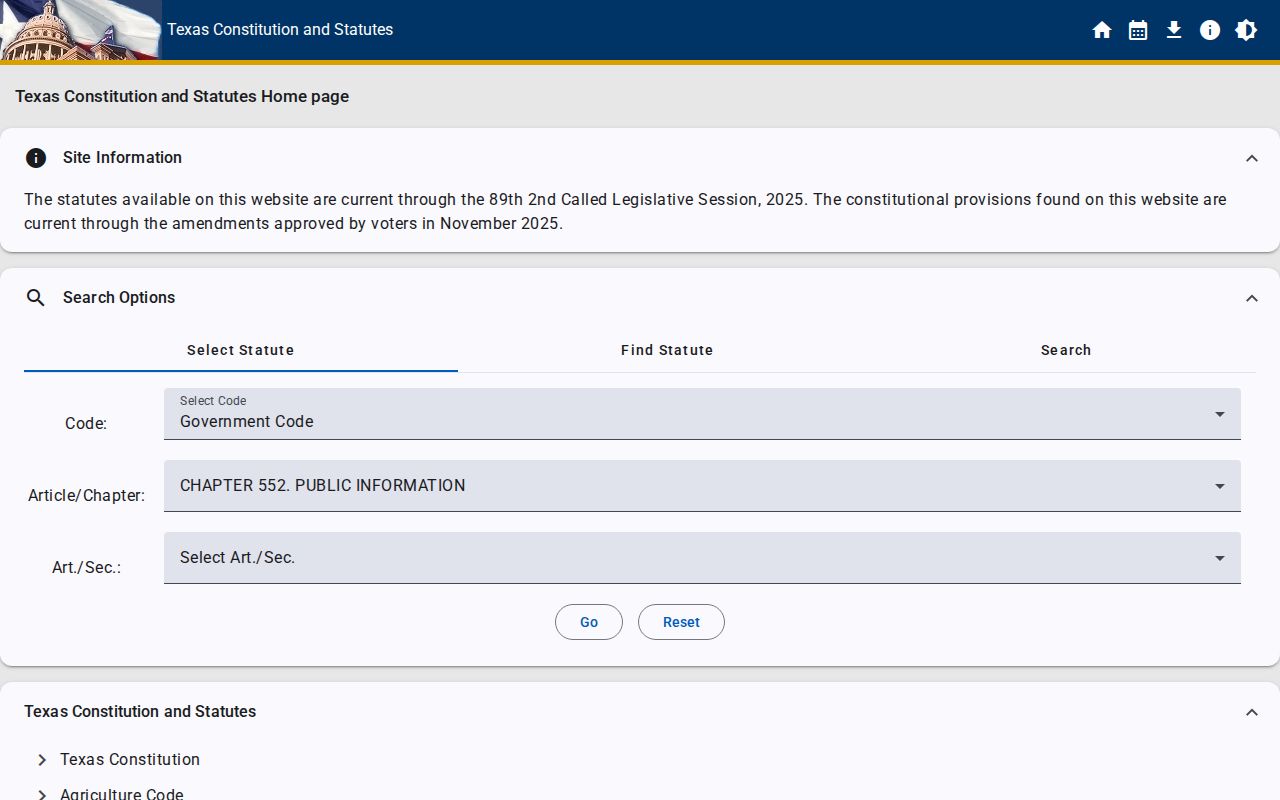
Reading the linked Public Information Act with the agency-specific laws explains why an office may release a docket but redact part of an incident report.
Wharton County Warrant Record Fallback
Wharton County does not publish a verified master active-warrant name search. Start by calling WCSO at 979-532-1550 for routing, though staff may limit confirmation for safety. Then check the court that may have issued the warrant. District Court handles felony capiases, County Court handles Class A and B matters, and municipal or justice courts handle many Class C warrants. A municipal capias pro fine may not appear in the district felony system.
Do not make an unannounced court visit if you believe your own arrest warrant is active. Contact the issuing court about docket or payment instructions where appropriate and seek legal advice about surrender and bond. Only the issuing court or agency can confirm clearance. Portal data can lag after payment, recall, or execution.
Note: Sealed warrants, sealed indictments, juvenile matters, and active law-enforcement details are not ordinary public list records.
Sealed, Expunged, and Restricted Records
Texas uses expunction for qualifying arrest and case records and orders of nondisclosure for a different group of outcomes. Expunction can direct named agencies to remove, destroy, or return covered records. Nondisclosure restricts ordinary public release but preserves access for criminal-justice and other entities listed by law. Juvenile files, victim identities, Social Security numbers, license numbers, and financial data also have separate protections.
Eligibility depends on the full outcome and timing. A dismissal alone does not prove that an arrest qualifies, and deferred adjudication often points toward nondisclosure instead of expunction. A Wharton County expunction petition is filed with the District Clerk. Its 2022 schedule lists a $350 new civil filing plus $15 per agency, but the clerk must confirm current totals, service, and copy costs. Each custodian must be correctly named in the petition and order.
The Texas Office of Court Administration publishes official nondisclosure forms and instructions.
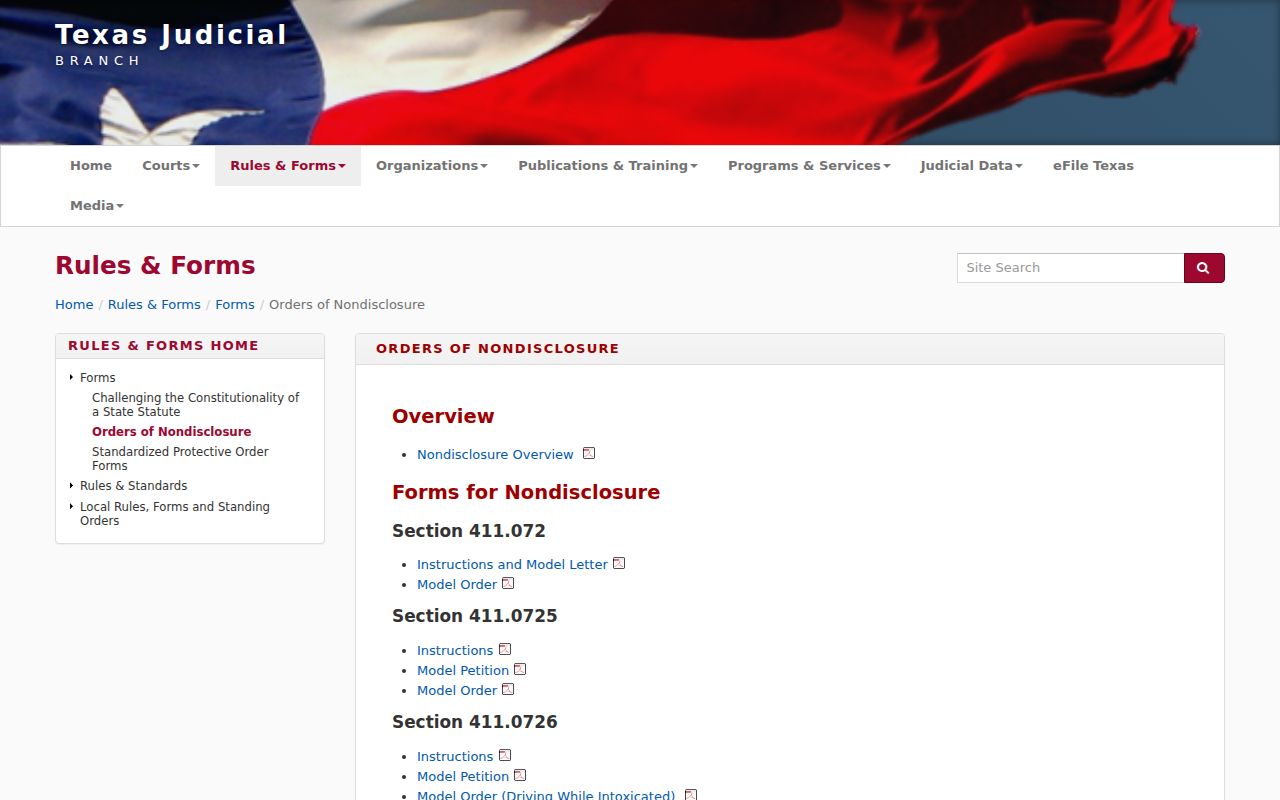
The form set is organized by statute, which reinforces why the correct legal path depends on the case outcome.
Federal Records Beyond Wharton County
Federal criminal cases from Wharton County belong to the Southern District of Texas, not the county clerks. Use PACER for federal dockets and filed documents. The Victoria Division counter is at the Martin Luther King Jr. Federal Building, 312 S. Main Street, Room 406, Victoria, and uses 361-788-5000. Federal custody is searched through the Bureau of Prisons locator, while the FBI Identity History Summary is the fingerprint-based, subject-only route for reviewing the FBI-held history.
The federal case portal shown below sits outside every Wharton County criminal court system.
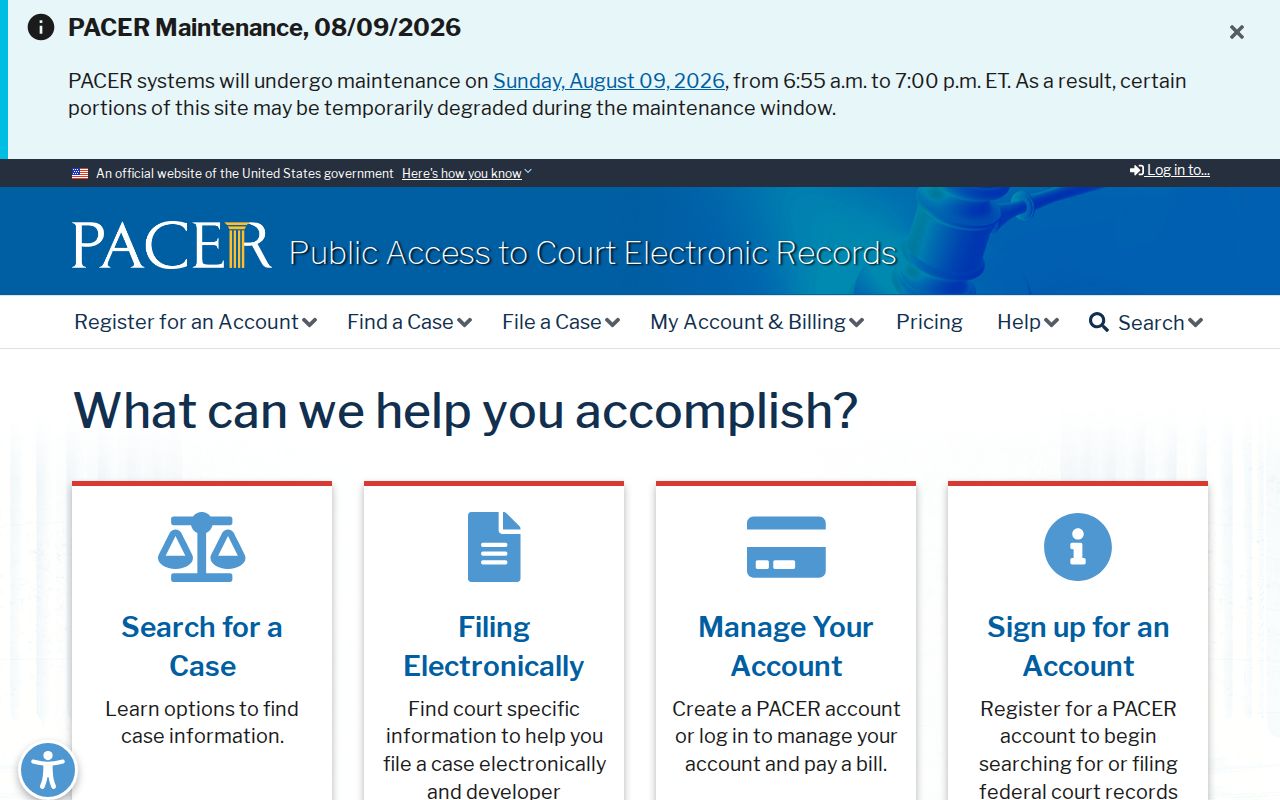
PACER records do not include ordinary county prosecutions, WCSO bookings, or TDCJ custody.
Wharton County Criminal Records by City
Local criminal records begin differently in Wharton County's three largest incorporated cities. El Campo Police Department keeps the reports its officers create, while El Campo Municipal Court handles fine-only city matters. Wharton Police Department and Wharton Municipal Court remain separate from the county offices in the county seat. East Bernard relies on county Sheriff and Precinct 2 law-enforcement routes, while its Municipal Court keeps local fine-only files. Custodial arrests from all three cities move into WCSO channels, and higher misdemeanors or felonies move to the proper county clerk.
El Campo Criminal Records
Population 12,350 · Police reports, city requests, and Municipal Court records.
Wharton Criminal Records
Population 8,627 · City police and court files beside a separate county system.
East Bernard Criminal Records
Population 2,218 · Municipal records with Sheriff and Precinct 2 fallbacks.
Wharton County Record Access Context
Wharton County covers 1,086.14 square miles, so phone and written records access matters for residents far from the county seat. The courthouse at 100 S. Fulton Street, District Clerk next door, County Clerk on E. Milam Street, and District Attorney farther along E. Milam form a compact but divided records campus. Asking only for “the courthouse” can send a requester to the wrong custodian.
Crime totals require the same care. Use the FBI Crime Data Explorer for a named reporting agency, year, and measure. Do not assign countywide numbers to El Campo, Wharton, or East Bernard. Sheriff, city police, and state agencies may report different populations and definitions.
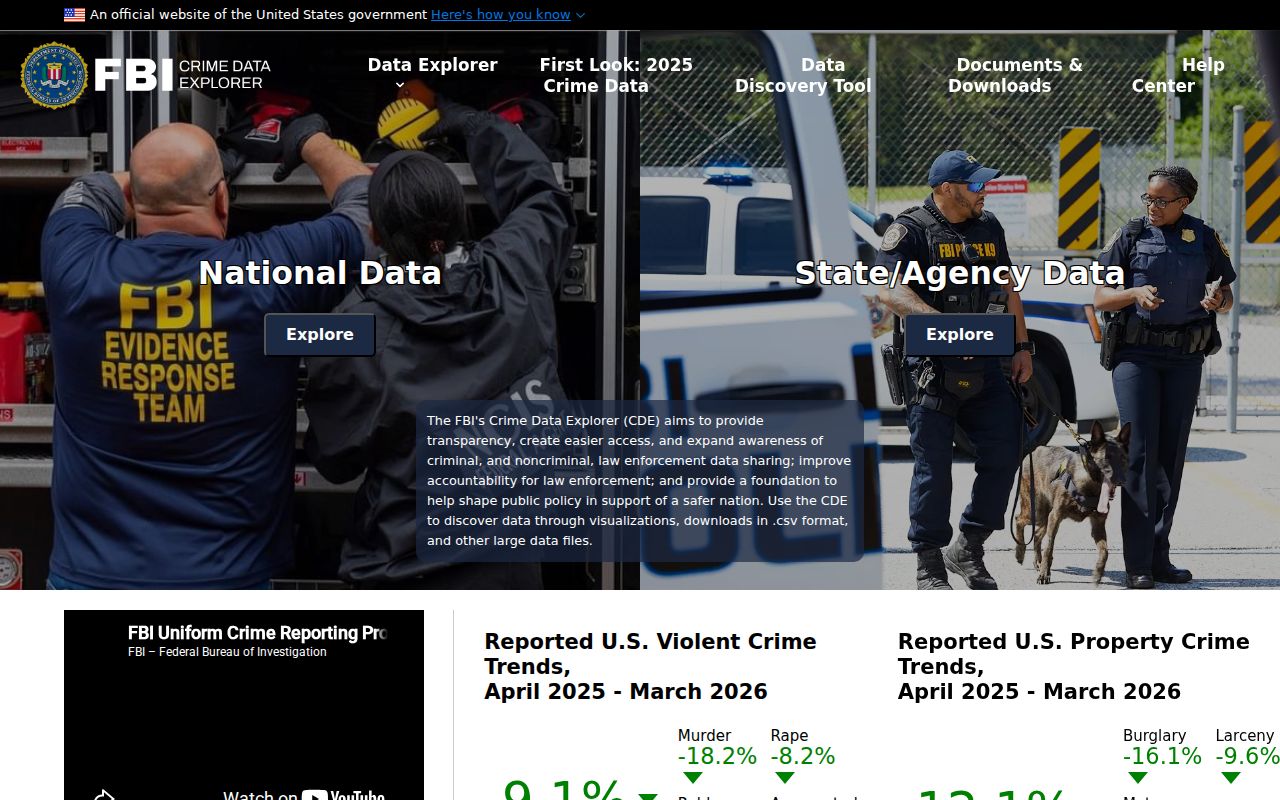
The official data interface supports local context without turning demographic facts or raw totals into claims about individuals.
A 2026 county procurement for a new Sheriff's Office and jail building may change detention counters, addresses, or roster operations. Check the live WCSO page before travel. The sheriff also advertises a mobile app, but the official source did not verify app-only search features, so it should be treated as an agency contact channel rather than a promised warrant or roster tool.